overview
Low maintenance, safe, durable, beautiful and affordable
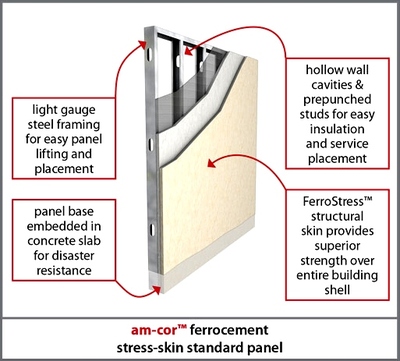
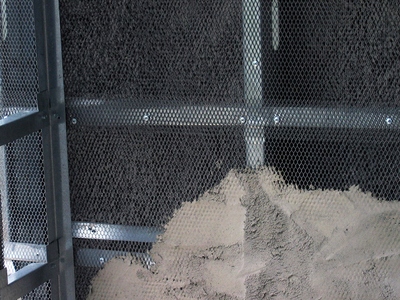
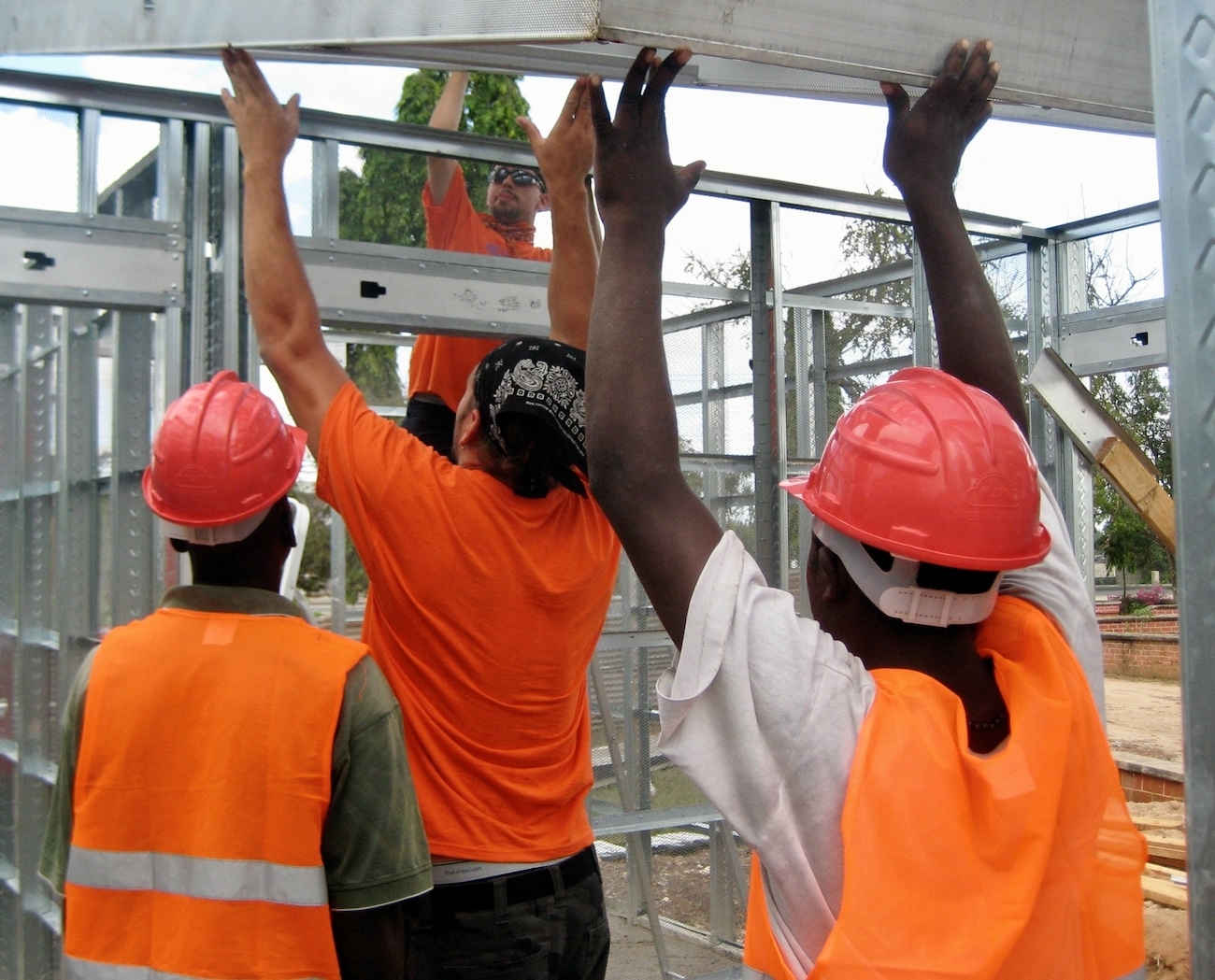
The am-cor™ system employs galvanized cold rolled light gauge steel profiles to create a unified steel frame. Structural frame members are imbedded in a reinforced concrete foundation. This rigid frame is then coated with a highly reinforced thin cement skin to produce a continuous structural shell around the entire steel framework. The system utilizes the structural bond between cement and steel, to create building shells that are lightweight, extremely strong, and exceptionally durable. This thin cement skin is composed of amcorite™, which is coated with water resistant white cement, tinted and textured to design requirements. Insulation, services, and interiors are installed using standard materials and methods.
The am-cor™ construction system is an amalgamation of 3 structural ideas:
1. ferrocement - a method of creating thin highly reinforced cement and steel shells
2. light gauge galvanized cold rolled steel framing - commonly used as non-structural commercial interior partitions and ceilings
3. stress-skin panels - panelized structures designed to resist stress by directing forces to their exterior surfaces.
FERROCEMENT was invented in France by Joseph Louis Lambot in 1848, and was originally used to create cement boat hulls. Since then, architects such as Antonio Gaudi and Felix Candella have successfully used it to create thin cement shell vaulted structures, and the system was even used to construct floating concrete docks during the Invasion of Normandy. The ferrocement method uses a higher proportion of steel reinforcement with a smaller amount of concrete than traditional reinforced concrete, increasing the overall strength to weight ratio, which allows for greater spans using less material. The am-cor™ system uses a special additive called amcorite™ to strengthen and extend its ferrocement composition. When mixed with normal portland cement, amcorite increases the strength and water resistance of portland cement by reducing its porosity and shrinkage. The amcorite, portland cement, and steel lath mix results in a very strong and thin exostructure.
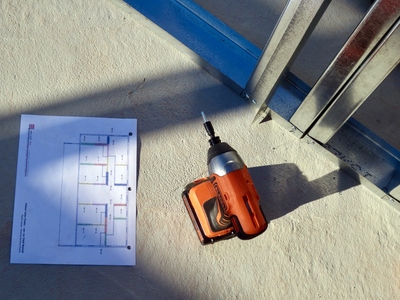
LIGHT GAUGE FRAMING is the preferred commercial framing method in the United States. Interior spaces are created by power screwing cold rolled steel in C shaped studs into U shaped receiving channels called track. Galvanization of the members inhibits rust. The system is fire resistant when used with gypsum drywall surfaces. Frame members can be formed from various thicknesses and types of steel coil. Light gauge framing is now accepted by the new International Building Code (IBC) as a primary structural framework for low rise residential buildings.
STRESS SKIN PANELS employ a light interior matrix to keep exterior surfaces separated. When the matrix is glued to the surfaces, stress caused by any force against such a panel is directed through the surfaces. Since the panel's surface area is greater than matrix cross sectional area, unit stress is reduced, and strong panels can be made using a minimum of material. Hollow core doors composed of a thin plywood exterior separated by honeycomb plasticized cardboard, and SIPS (structural insulated panel system) panels with plywood surfaces separated by foam insulation are examples of stress skin panels.
The am-cor™ draws from each of these accepted structural concepts to create a cohesive construction system with a few important additions. For example, am-cor™ structural design requires its light gauge framework to be imbedded in concrete slabs at each building level. This requirement increases structural strength and provides resistance to overturning forces at each vertical frame member. The floor and roof slabs form horizontal structural diaphragms that provide torsional resistance to twisting caused by wind or seismic forces, and unify the walls at each level, creating a series of structural cells. Also, the use of the amcorite™ cement additive reinforces the continuous cement skin which adheres to the exterior face of the entire structure, providing both horizontal and vertical continuity. Any localized stress is spread out over the entire structural frame, thereby reducing stress concentration on any given member. These special characteristics, in addition to the three basic structural methods, allow am-cor™ light gauge unified steel and cement structures to resist even disaster level forces. To see how an am-cor™ building goes up, please visit our SEQUENCE section.
am-cor™ structures are built to last. Panels are made of 30,000 psi. rust resistant galvanized steel, surfaced with at least one layer of 5,000 psi. amcorite™ ferrocement structural skin, which does not require painting. Cement's durability record is 2,000 years old, dating back to the Pantheon in Rome. Compare this with plastic based stucco or vinyl siding, which lasts for only about 17 years when exposed to ultra-violet sunlight. High durability means little or no replacement over time, or due to disaster. Also, the inert materials used in an am-cor™ structure are not susceptible to mold, mildew, rot and infestation, omitting the need for expensive, recurring and possibly dangerous chemical treatments.
The tensile strength of steel and compressive strength of concrete are balanced in am-cor™ design, meaning that both materials are used most efficiently. This balance results in less material, and therefore less cost, per unit of space enclosed by the structural shell. It also means that extremely strong structures can be created at a cost equal or less than traditional construction methods.
The am-cor™ unified steel and cement system is one of the all-around safest buildings systems. Steel and cement, being inert non-toxic mineral substances, are fire, insect, vermin, mold and mildew resistant. The am-cor™ system itself allows for greater protection from hurricanes, tornados, earthquakes, fire and floods.
All am-cor™ materials are completely fireproof and non-combustible, have a zero flame spread rating, and do not out-gas under extreme heat. All walls and intermediate floors are UL rated and approved by the International Building Code (IBC), even for incapacitated occupancy. In the event of a fire, the furniture and other contents of a building may sustain smoke damage; however, an am-cor™ structure will not burn or collapse, allowing occupants a greater chance of escape.
The system's flood & hurricane resistance comes from having an extremely rigid steel frame coated with reinforced waterproofed cement. The shell consists of all galvanized steel and cement, so there is no rust or deterioration with moisture. In the event of hurricanes or floods, am-cor™ unified steel and cement shells resist flood waters and hurricane wind forces without sustaining structural damage.
An am-cor™ building is a life saving structure with a high strength to weight ratio. During seismic events, an am-cor™ unified steel & cement frame may deform, but will not collapse because of the deformation. An am-cor™shell's walls, floors and roofs may deform, but will not fall on occupants, also allowing a greater chance of escape.
An am-cor™ structure is safe from infestation of insects and vermin, because pests cannot pass through the steel structure or cement skin. Also, the materials offer them no food or shelter, as opposed to wood structures. am-cor™ wall cavities are inert and hygroscopic, providing no breeding ground for bacteria, mold, mildew or fungus, and the health dangers that accompany them.
Cellular design is an integral part of the am-cor™ system of making efficient structures by reducing unit stress. Subdividing the 3-dimensional building into structural cells mitigates possibility of progressive collapse, a major effect of seismic disturbance on buildings. Most steel structures are conceived as series of 2-dimensional framelines, which are usually independently considered and connected only by roof purlins, wall girts, or cable cross bracing, none of which are capable of resisting rotational moment. Frame members in an am-cor™ structure are “glued” to the ferrocement surface by the steel and cement bond, which forms the basis for reinforced concrete structures. Since these members have C and U configurations with high moments of inertia, they provide much greater stiffness and larger “glued” contact area than normal concrete reinforcing bars. So they act more like the matrix of a stress skin panel than like normal reinforcing bars. The result is a much stiffer and stronger structural shell using less steel and less cement.
am-cor™ structures are extremely durable, able to weather harsh conditions and even natural disasters. The structural frame composed of long lasting rust resistant galvanized steel members, which are imbedded in a concrete foundation. This secure anchor to the foundation means that under earthquake, hurricane, and flood conditions, the frame will bend in response to disaster forces instead of toppling, blowing, or washing away.
Cement exteriors and other special finishes add to the durability of an am-cor™ structure. Concrete provides increased security and does not deteriorate under the ultra-violet rays of the sun (like standard vinyl siding); additionally, concrete has a 2,000 year history of exposed cement longevity (the Pantheon in Rome). A weatherproof tinted reinforced cement finish or ceramcorite™, which is a ceramic-cement high traffic, 0 perm, heat reflective white roof coat, can be applied over the reinforced structural amcorite™ structural continuous cement skin. Ceramcorite™ can also be used for seamless shower stalls, food prep and medical surfaces.
am-cor™ buildings can be outfitted with hurricane resistant thermal break windows, insulated steel doors, enamel metal roof tiles and metal eave trim.
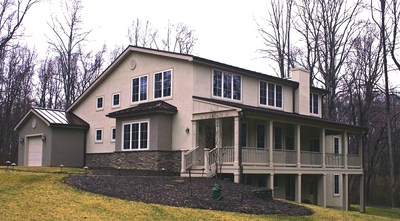
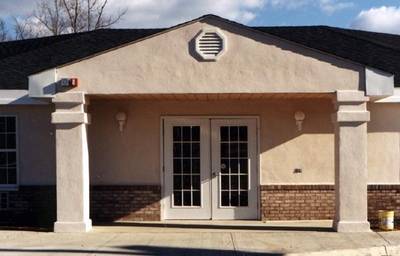
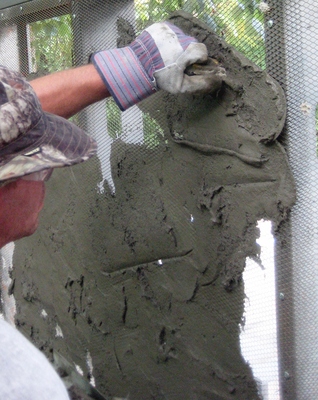
Whether the am-cor™ structural tinted weather coating is applied by hand or spray gun, its unique ability to cover any shape formed by the welded steel frame unifies the building and visually evokes a sense of strength and history. Lively textures can be formed by hand application of the color coat. With a full range of color and texture, the designer is free to create forms of any desired appearance. Various architectural styles are possible with am-cor™ construction, including southwest adobe, spanish american, classical, and contemporary.
The weather resistant amcorite™ finish coat allows indoors-outdoors design creating a unity of form and texture pleasing to the eye and to the imagination. This monolithic surface does not require joints or caps atop walls, cornices, corners, or thresholds. Any shape can be framed and coated with amcorite™, not just walls or flat surfaces. Also, the versatility of the am-cor™ system allows for any facade or interior or exterior surface. More than 15 textures and colors present an almost limitless choice of exterior surface appearance to the designer. The durability of am-cor™ materials ensure lasting beauty.
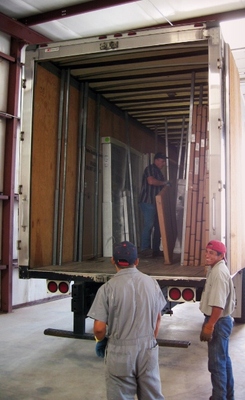
The am-cor™ unified steel and cement system is a cost-effective and efficient method of building mid-rise, medium-span structures the world over, especially in disaster-prone areas. It is particularly applicable to community projects because of its portability and ease of assembly and finish. Using the benefits of repetition and scale allows quick construction of disaster resistant durable buildings to become even more affordable. The am-cor™ PAK also includes an on-site training program. This training program offers a means to educate and instruct individuals and companies on this revolutionary building system, creating local employment at all skill levels.
The major limitation of ferrocement is the cost of formwork to support the wet concrete. am-cor™ uses a light gauge steel framework as the matrix for placement of a highly reinforced ferrocement surface. Unification of these 2 systems has created an economically viable and highly efficient structural system.

DETAILS
The am-cor™ construction system is an amalgamation of 3 structural ideas:
1. ferrocement - a method of creating thin highly reinforced cement and steel shells
2. light gauge galvanized cold rolled steel framing - commonly used as non-structural commercial interior partitions and ceilings
3. stress-skin panels - panelized structures designed to resist stress by directing forces to their exterior surfaces.
FERROCEMENT was invented in France by Joseph Louis Lambot in 1848, and was originally used to create cement boat hulls. Since then, architects such as Antonio Gaudi and Felix Candella have successfully used it to create thin cement shell vaulted structures, and the system was even used to construct floating concrete docks during the Invasion of Normandy. The ferrocement method uses a higher proportion of steel reinforcement with a smaller amount of concrete than traditional reinforced concrete, increasing the overall strength to weight ratio, which allows for greater spans using less material. The am-cor™ system uses a special additive called amcorite™ to strengthen and extend its ferrocement composition. When mixed with normal portland cement, amcorite increases the strength and water resistance of portland cement by reducing its porosity and shrinkage. The amcorite, portland cement, and steel lath mix results in a very strong and thin exostructure.
LIGHT GAUGE FRAMING is the preferred commercial framing method in the United States. Interior spaces are created by power screwing cold rolled steel in C shaped studs into U shaped receiving channels called track. Galvanization of the members inhibits rust. The system is fire resistant when used with gypsum drywall surfaces. Frame members can be formed from various thicknesses and types of steel coil. Light gauge framing is now accepted by the new International Building Code (IBC) as a primary structural framework for low rise residential buildings.
STRESS SKIN PANELS employ a light interior matrix to keep exterior surfaces separated. When the matrix is glued to the surfaces, stress caused by any force against such a panel is directed through the surfaces. Since the panel's surface area is greater than matrix cross sectional area, unit stress is reduced, and strong panels can be made using a minimum of material. Hollow core doors composed of a thin plywood exterior separated by honeycomb plasticized cardboard, and SIPS (structural insulated panel system) panels with plywood surfaces separated by foam insulation are examples of stress skin panels.
The am-cor™ draws from each of these accepted structural concepts to create a cohesive construction system with a few important additions. For example, am-cor™ structural design requires its light gauge framework to be imbedded in concrete slabs at each building level. This requirement increases structural strength and provides resistance to overturning forces at each vertical frame member. The floor and roof slabs form horizontal structural diaphragms that provide torsional resistance to twisting caused by wind or seismic forces, and unify the walls at each level, creating a series of structural cells. Also, the use of the amcorite™ cement additive reinforces the continuous cement skin which adheres to the exterior face of the entire structure, providing both horizontal and vertical continuity. Any localized stress is spread out over the entire structural frame, thereby reducing stress concentration on any given member. These special characteristics, in addition to the three basic structural methods, allow am-cor™ light gauge unified steel and cement structures to resist even disaster level forces. To see how an am-cor™ building goes up, please visit our SEQUENCE section.
LOW MAINTENANCE
am-cor™ structures are built to last. Panels are made of 30,000 psi. rust resistant galvanized steel, surfaced with at least one layer of 5,000 psi. amcorite™ ferrocement structural skin, which does not require painting. Cement's durability record is 2,000 years old, dating back to the Pantheon in Rome. Compare this with plastic based stucco or vinyl siding, which lasts for only about 17 years when exposed to ultra-violet sunlight. High durability means little or no replacement over time, or due to disaster. Also, the inert materials used in an am-cor™ structure are not susceptible to mold, mildew, rot and infestation, omitting the need for expensive, recurring and possibly dangerous chemical treatments.
The tensile strength of steel and compressive strength of concrete are balanced in am-cor™ design, meaning that both materials are used most efficiently. This balance results in less material, and therefore less cost, per unit of space enclosed by the structural shell. It also means that extremely strong structures can be created at a cost equal or less than traditional construction methods.
SAFE
The am-cor™ unified steel and cement system is one of the all-around safest buildings systems. Steel and cement, being inert non-toxic mineral substances, are fire, insect, vermin, mold and mildew resistant. The am-cor™ system itself allows for greater protection from hurricanes, tornados, earthquakes, fire and floods.

All am-cor™ materials are completely fireproof and non-combustible, have a zero flame spread rating, and do not out-gas under extreme heat. All walls and intermediate floors are UL rated and approved by the International Building Code (IBC), even for incapacitated occupancy. In the event of a fire, the furniture and other contents of a building may sustain smoke damage; however, an am-cor™ structure will not burn or collapse, allowing occupants a greater chance of escape.
The system's flood & hurricane resistance comes from having an extremely rigid steel frame coated with reinforced waterproofed cement. The shell consists of all galvanized steel and cement, so there is no rust or deterioration with moisture. In the event of hurricanes or floods, am-cor™ unified steel and cement shells resist flood waters and hurricane wind forces without sustaining structural damage.
An am-cor™ building is a life saving structure with a high strength to weight ratio. During seismic events, an am-cor™ unified steel & cement frame may deform, but will not collapse because of the deformation. An am-cor™shell's walls, floors and roofs may deform, but will not fall on occupants, also allowing a greater chance of escape.
An am-cor™ structure is safe from infestation of insects and vermin, because pests cannot pass through the steel structure or cement skin. Also, the materials offer them no food or shelter, as opposed to wood structures. am-cor™ wall cavities are inert and hygroscopic, providing no breeding ground for bacteria, mold, mildew or fungus, and the health dangers that accompany them.
Cellular design is an integral part of the am-cor™ system of making efficient structures by reducing unit stress. Subdividing the 3-dimensional building into structural cells mitigates possibility of progressive collapse, a major effect of seismic disturbance on buildings. Most steel structures are conceived as series of 2-dimensional framelines, which are usually independently considered and connected only by roof purlins, wall girts, or cable cross bracing, none of which are capable of resisting rotational moment. Frame members in an am-cor™ structure are “glued” to the ferrocement surface by the steel and cement bond, which forms the basis for reinforced concrete structures. Since these members have C and U configurations with high moments of inertia, they provide much greater stiffness and larger “glued” contact area than normal concrete reinforcing bars. So they act more like the matrix of a stress skin panel than like normal reinforcing bars. The result is a much stiffer and stronger structural shell using less steel and less cement.
DURABLE
am-cor™ structures are extremely durable, able to weather harsh conditions and even natural disasters. The structural frame composed of long lasting rust resistant galvanized steel members, which are imbedded in a concrete foundation. This secure anchor to the foundation means that under earthquake, hurricane, and flood conditions, the frame will bend in response to disaster forces instead of toppling, blowing, or washing away.
Cement exteriors and other special finishes add to the durability of an am-cor™ structure. Concrete provides increased security and does not deteriorate under the ultra-violet rays of the sun (like standard vinyl siding); additionally, concrete has a 2,000 year history of exposed cement longevity (the Pantheon in Rome). A weatherproof tinted reinforced cement finish or ceramcorite™, which is a ceramic-cement high traffic, 0 perm, heat reflective white roof coat, can be applied over the reinforced structural amcorite™ structural continuous cement skin. Ceramcorite™ can also be used for seamless shower stalls, food prep and medical surfaces.
am-cor™ buildings can be outfitted with hurricane resistant thermal break windows, insulated steel doors, enamel metal roof tiles and metal eave trim.
BEAUTIFUL
Whether the am-cor™ structural tinted weather coating is applied by hand or spray gun, its unique ability to cover any shape formed by the welded steel frame unifies the building and visually evokes a sense of strength and history. Lively textures can be formed by hand application of the color coat. With a full range of color and texture, the designer is free to create forms of any desired appearance. Various architectural styles are possible with am-cor™ construction, including southwest adobe, spanish american, classical, and contemporary.

The weather resistant amcorite™ finish coat allows indoors-outdoors design creating a unity of form and texture pleasing to the eye and to the imagination. This monolithic surface does not require joints or caps atop walls, cornices, corners, or thresholds. Any shape can be framed and coated with amcorite™, not just walls or flat surfaces. Also, the versatility of the am-cor™ system allows for any facade or interior or exterior surface. More than 15 textures and colors present an almost limitless choice of exterior surface appearance to the designer. The durability of am-cor™ materials ensure lasting beauty.
AFFORDABLE
The am-cor™ unified steel and cement system is a cost-effective and efficient method of building mid-rise, medium-span structures the world over, especially in disaster-prone areas. It is particularly applicable to community projects because of its portability and ease of assembly and finish. Using the benefits of repetition and scale allows quick construction of disaster resistant durable buildings to become even more affordable. The am-cor™ PAK also includes an on-site training program. This training program offers a means to educate and instruct individuals and companies on this revolutionary building system, creating local employment at all skill levels.
The major limitation of ferrocement is the cost of formwork to support the wet concrete. am-cor™ uses a light gauge steel framework as the matrix for placement of a highly reinforced ferrocement surface. Unification of these 2 systems has created an economically viable and highly efficient structural system.
Modified 2005-11-09